
Bacteriophages
The NexaBiome product is based on the use of bacteriophages. Bacteriophages (or phages) are organisms that infect and kill bacteria as part of their natural life cycle.
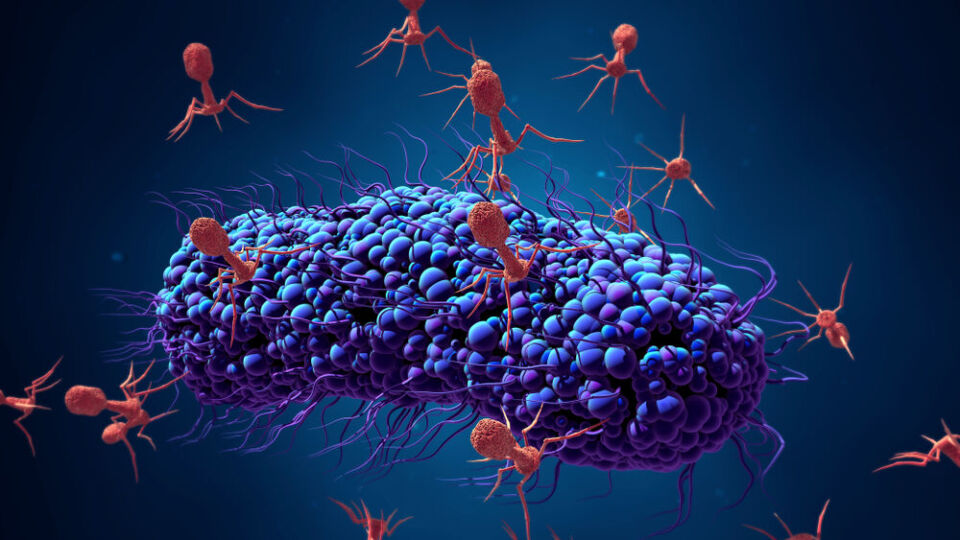
Self-replicating antimicrobials
A phage infects a bacterium by injecting its DNA through the cell wall. The phage DNA takes over the bacterium, forcing it to make tens to hundreds of new phages before bursting the host cell open.
These new phages can then go on to infect a new bacterium, repeating the cycle. In effect, phages act as self-replicating antimicrobials.
- Attach Phage binds to a single bacterium
- Inject DNA passes through the cell wall
- Replicate The bacterium makes new phages
- Burst The host cell bursts open
- Repeat New phages infect new bacteria
A vast natural resource
Phages are the most numerous organisms in the biosphere, with an estimated 10³¹ on the planet. They outnumber all bacteria, plants, animals and other cellular life combined. Despite measuring only nanometres in length, if placed end to end, they would extend beyond the observable Universe.
Phages play a major role in naturally regulating bacterial populations. They kill half the bacteria on the planet every two days, and have the potential to supplement the diminishing supply of effective chemical antibiotics.
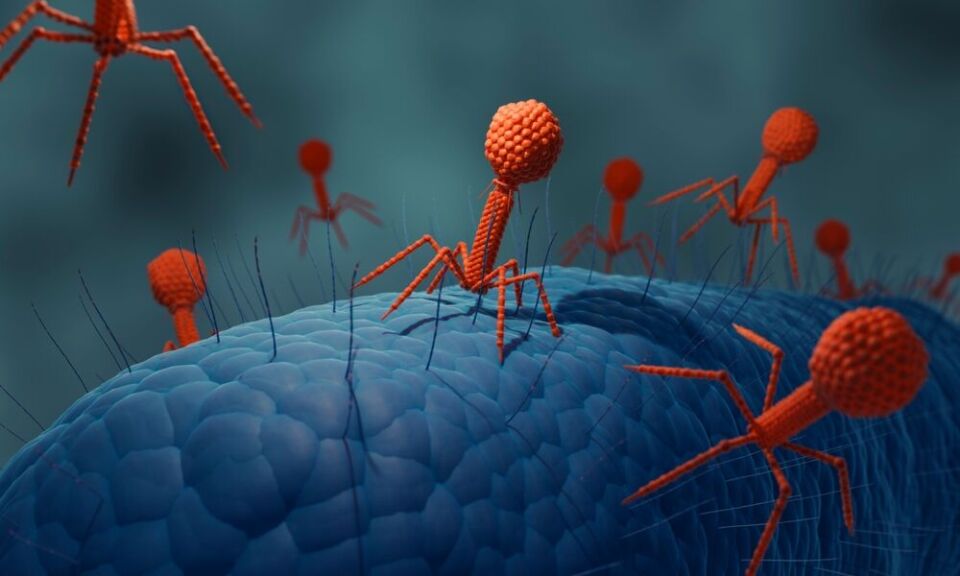
phages estimated on the planet
phages kill half the bacteria on the planet
phages target particular bacterial hosts
Turning potential into practical products
While phages are highly effective at killing their target bacteria, they also have features that can make them difficult to develop into viable antimicrobial products.
Highly specific
Phages are very specific to their bacterial host. This can be an advantage, as they will only kill the problem bacteria while leaving the healthy microbiome intact. However, this specificity means phages need to be combined into "cocktails" (combinations of 3 to 10 phages) to give good coverage of the target.
Sensitive to their environment
Because phages are organic, they are sensitive to environmental stresses, such as temperature, so purified phages need to be refrigerated to maintain their activity.
Hard to protect
Naturally occurring phages can also present intellectual property challenges, adding another layer of commercial complexity to their development.
NexaBiome Life Sciences has developed a suite of intellectual property that addresses these limitations, translating the potential of phages into effective, commercially viable antimicrobial products for hard-to-treat infections that can form a sustainable part of the response to AMR.
Making phages practical
We're addressing the challenges of phage stability and selection to support the development of effective antimicrobial products.